




24 Sep Traditional Asante Buildings
The traditional Asante buildings represent a valuable architectural legacy that offers us a window into the rich history of the Asante civilization during the 18th century in what is now known as Ghana. This kingdom stood out as one of the most opulent and powerful in Africa during its time, and its cultural and religious influence is reflected in these traditional buildings.
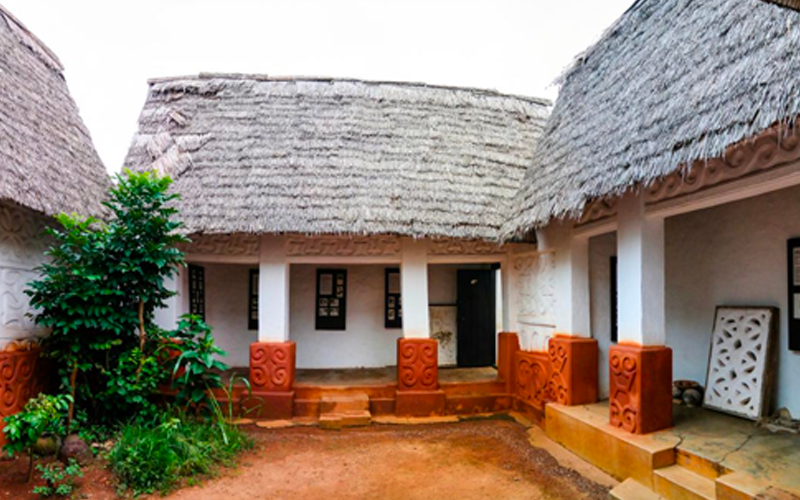
Situated in the vicinity of Kumasi, the historical capital of Asante, these buildings stand as silent witnesses to the past greatness of the civilization. Their significance is acknowledged by the UNESCO list, which safeguards them as World Heritage, emphasizing their value not only in Ghana’s history but also in global cultural heritage.
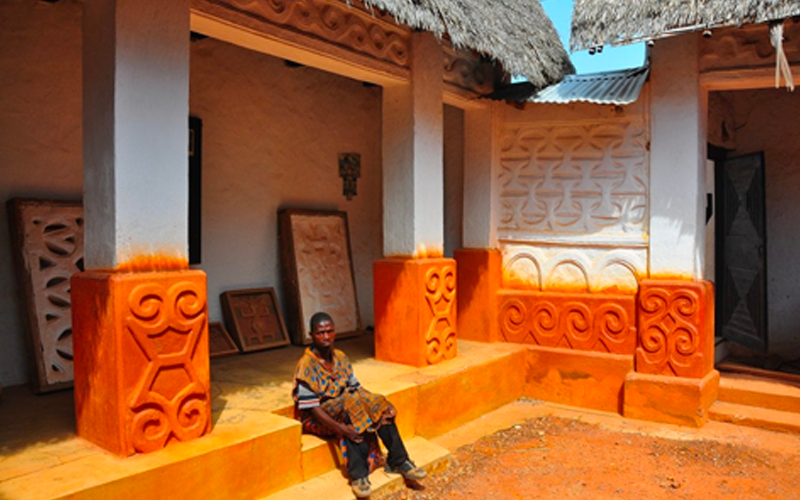
These buildings comprise around 10 houses and shrines constructed using natural materials like mud, wood, and thatch. Their primary purpose was associated with religious practices, and even today, one can admire the impressive bas-reliefs adorning the walls of these structures. These bas-reliefs narrate stories and express religious beliefs, providing a rich source of knowledge about Asante spirituality.
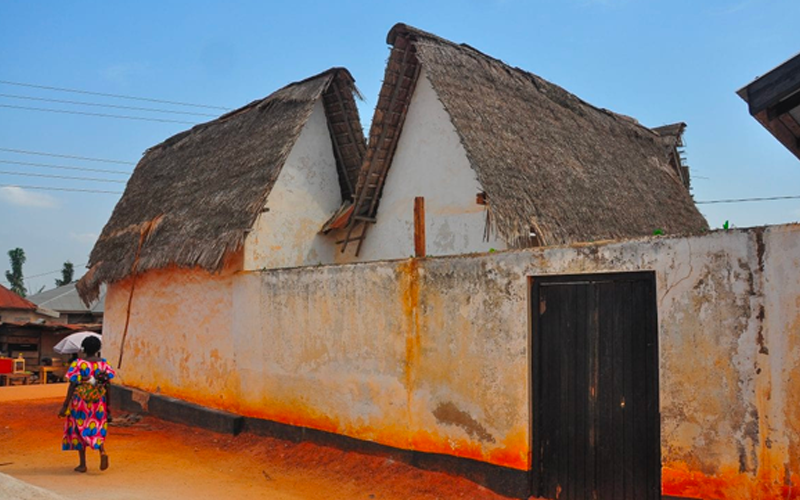
It is essential to note that due to the fragility of the original materials used in the construction of these houses and shrines, they have been vulnerable to weather-related damage over the years. To preserve this valuable heritage, traditional master craftsmen took care of their maintenance for a considerable period. However, in the 1900s, the government assumed responsibility for maintaining these structures, leading to the introduction of more robust materials, such as corrugated roofs, in place of the traditional ones. This change may have sparked a debate about the authenticity of the structures, but it also ensures their long-term survival.
Sorry, the comment form is closed at this time.